




Are nasal CPAP masks the right choice for your sleep apnea therapy? We explore their benefits, compare them to full-face models, and highlight the features of top-rated masks.
The Ultimate Guide to CPAP Nasal Masks
Nasal CPAP masks are one of the best options for effective sleep apnea therapy. The benefits of using a nasal model instead of a full-face mask are numerous, but unfortunately, not many patients are fully educated on the subject.
Nasal masks are specially designed to fit your individual therapy needs, especially if you:
- Naturally breathe through your nose at night;
- Are an active or side sleeper;
- Feel claustrophobic wearing a bulky full-face mask;
- Want the freedom to read or watch TV in bed before going to sleep.

What Are the Advantages of Nasal Masks?
Studies have shown that nasal CPAP masks help patients achieve better adherence to their prescribed therapy without discontinuing it. They are designed to provide freedom of movement and are perfect for both side and back sleepers. The new-generation nasal masks offer unmatched levels of performance, comfort, and a thorough seal compared to older models.
✓ Freedom of Movement
Patients feel significantly freer in bed. You can turn and change positions without risking the seal bending, leaking, or creaking, which often happens with larger masks.
✓ Ideal for Nose Breathers
A nasal mask is the preferred choice for CPAP users who sleep with their mouths closed. It is unobtrusive, easy to put on and take off, and provides a highly effective, steady stream of pressurized air directly to the airways.
✓ Handles Higher Air Pressure
Unlike nasal pillow masks (which can be uncomfortable at high pressures), traditional nasal masks can easily support CPAP settings of 10 cmH2O and higher without causing nasal irritation.
✓ Better Intimacy & Comfort
Thanks to a lower profile and fewer bulky parts, patients enjoy a more natural bedtime experience. You won't feel "trapped" behind a wall of silicone and plastic.
Nasal Masks vs. Full-Face Masks
The main difference between nasal masks and full-face masks is coverage. Nasal masks fit exclusively over (or under) the nose, while full-face masks cover both the nose and the mouth. Both connect to the CPAP machine via standard tubing, but nasal masks deliver air solely through the nasal passages.

Because they are smaller and less bulky, nasal masks are much less claustrophobic. However, some users might take a few days to get used to the contact the mask makes with the bridge of the nose or the upper lip.
The New Generation of Nasal Masks
ResMed AirFit N30i Nasal Mask
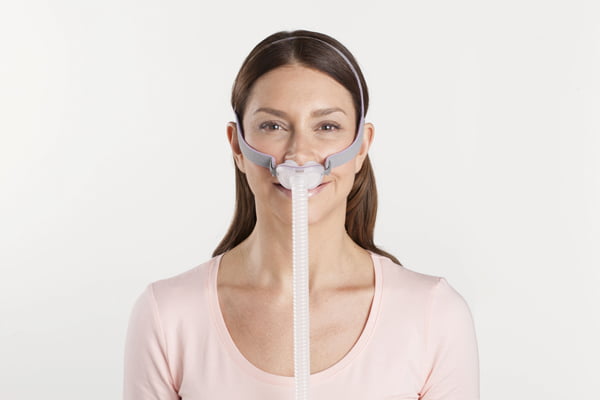
The latest ResMed nasal masks come with many neat features worth noting, particularly models with a top-of-head hose connection, such as the ResMed AirFit N30i. The N30i is an innovative nasal cradle mask with huge advantages over standard over-the-nose models.
It provides significantly less pressure on the bridge of the nose and allows you to toss and turn freely. The revolutionary design creates a “complete solution” focused on therapy adherence. It consists of minimal parts, leaves fewer facial marks, offers a completely unobstructed field of vision, and is one of the quietest nasal masks on the market.
Therapy Adherence: The Key to Success
Successful treatment of sleep apnea requires strict adherence to your therapy. Although highly effective, adherence to life-saving CPAP therapy remains problematic for some patients who may not initially be accustomed to wearing a mask.
Many patients who require CPAP therapy fail to adhere to their program and discontinue treatment prematurely because they feel uncomfortable with a large, full-face mask. By switching to a lightweight nasal mask, comfort increases drastically, reducing the chance of giving up on therapy.
Useful tips for success: Always remind yourself that you are undergoing home sleep apnea treatment to protect your health. Talk to your partner and encourage them to share their thoughts. If you have difficulty getting used to your mask, don't just quit—consult your doctor or equipment provider about trying a different mask style or size.

When NOT to Choose a Nasal Mask
Although they are the most preferred option for many, nasal models do have their drawbacks and are not universally suitable for every patient. You should likely opt for a Full-Face Mask instead if:
✗ You are a Mouth Breather
If your jaw drops and you breathe through your mouth while you sleep, a nasal mask will cause the pressurized air to escape through your mouth, leading to severe dry mouth and ineffective therapy (unless you successfully pair it with a CPAP chinstrap).
✗ You Suffer from Chronic Congestion
Nasal masks are not recommended for patients suffering from chronic sinusitis, severe allergies, a deviated septum, or any condition that frequently blocks the nasal passages.
✗ You Require Extremely High Pressure
While standard nasal masks handle higher pressures better than nasal pillows, very high BiPAP/CPAP settings can sometimes cause uncomfortable nasal dryness or leaks. In such extreme cases, a full-face mask distributes the pressure more evenly.
FAQ: How to Choose the Right Nasal Mask
How do I know my correct mask size?
Which mask is best for my sleeping position?
How often should I clean and replace my nasal mask?
Please note: Choosing a CPAP mask is a personal medical decision, and facial structures vary wildly—what works perfectly for one person may leak for another. Always consult your sleep specialist or CPAP supplier to determine which specific mask type and size will best support your individual sleep apnea therapy.