


If you are considering packing your CPAP for a trip to the great outdoors, do not be discouraged – it can absolutely be done! While spending the night in a tent doesn't offer the comfort of home, and naturally occurring wall sockets are scarce in the wild, you don’t have to compromise your health. In this comprehensive guide, we'll explain how to properly power your CPAP in the wild and review the ultimate travel-friendly devices.
Camping with CPAP is All About the Right Planning
To ensure a flawless camping trip while maintaining your sleep apnea therapy, proper preparation is key. Before heading out, follow these essential pre-trip steps:
- Step 1: Choose the Right Machine – If you have a dedicated travel CPAP, use its protective carry bag. Travel models are lightweight, compact, and designed to save valuable pack space.
- Step 2: Pack Vital Supplies – Double-check that you have packed your specific CPAP mask, headgear, connector elbow, and the correct hoses or tubing.
- Step 3: Calculate Your Power Requirements – Fully charge your external CPAP batteries before leaving. Calculate exactly how many hours of run-time your battery setup provides to ensure you do not run out of power off-grid.
What If You Don't Have Extra Batteries? Off-Grid Power Solutions
If you don't own a heavy, standalone lithium battery, there are still excellent ways to keep your machine powered in the wild. Modern technology makes running your CPAP off-grid incredibly convenient:
12V DC Car Adapters
The vast majority of leading CPAP manufacturers offer specialized 12-volt DC power adapters. These allow you to power your machine directly from your vehicle's cigarette lighter outlet—perfect for car camping or quick recharges.
Deep-Cycle Marine Batteries
If you have access to a 12-volt marine or leisure battery, you can use a compatible DC battery cable adapter with alligator clips to draw power directly from the battery, providing multiple nights of quiet operation.
Portable Solar Panels
For long, multi-day off-grid adventures, pairing a portable folding solar panel with a lightweight CPAP battery (like the Pilot-24 Lite) allows you to harness the sun's energy during the day to keep your therapy running indefinitely.
The Ultimate Camping Solution: ResMed AirMini

#1 ResMed AirMini Travel CPAP
King of PortabilityThe ResMed AirMini is the world’s smallest CPAP machine — so remarkably compact that it fits in the palm of your hand! Weighing in at only 10.6 ounces (295g), this micro-device is designed specifically for campers, travelers, and outdoor enthusiasts who refuse to let sleep apnea limit their adventures.
Despite its tiny size, the AirMini does not compromise on clinical efficacy. It utilizes the exact same, world-renowned therapy algorithms as the premium bedside AirSense 10 and 11, including auto ramp, SmartStart, Bluetooth connectivity, and advanced expiratory pressure relief (EPR). Additionally, it uses ResMed's waterless HumidX™ system, allowing you to enjoy humidification without the bulk of a heavy water tub.
“I can't believe how tiny my AirMini is, it fits in my palm and works perfectly when I'm on the road. I was worried it'd be loud, but it's actually quiet and efficient.”
An Affordable Off-Grid Pioneer: Transcend Auto
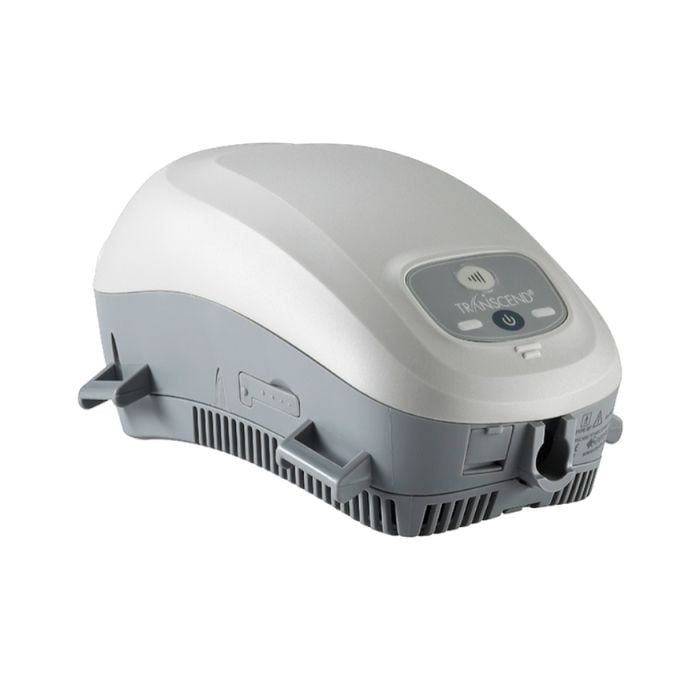
Transcend Auto Travel CPAP
Rugged & ReliableAnother excellent, budget-friendly option for camping with sleep apnea is the Transcend Auto Travel CPAP device. This machine is a true pioneer in the portable category, built to withstand rugged outdoor use while maintaining a very affordable price point.
The Transcend Auto weighs only 0.63kg and features a highly durable casing, making it perfect for packing into a hiking backpack. It comes with Transcend's advanced air bearing blower technology (EZEX) for exceptionally quiet and vibration-free operation, ensuring you and your tent partner sleep peacefully in the quiet of the wild.
What Happens If You Stop Your Sleep Apnea Therapy for Several Days?
While it might seem tempting to leave your CPAP equipment behind for a weekend getaway under the stars, **stopping your sleep apnea therapy is a highly dangerous decision**.
Your biological clock does not adapt to weekend schedules. The moment you sleep without your CPAP, your airway will collapse again, triggering oxygen drops, spike-like increases in heart rate, and chronic micro-arousals. You will wake up experiencing severe morning brain fog, heavy headaches, and profound daytime fatigue—ultimately ruining your camping trip.
Rather than risking your health and safety on the trails, take advantage of the compact travel CPAP solutions engineered specifically for off-grid use.
Frequently Asked Questions
Can I use my standard home CPAP for camping?
Yes, you can use your home machine (like the AirSense 10 or 11) for camping, but you will need a substantial external battery pack (like the Medistrom Pilot-24 Lite) and a compatible DC cable. To maximize battery life, you must turn off the heated humidifier and heated tube, as heating elements draw a massive amount of power.
How long does a CPAP battery typically last while camping?
Most lightweight CPAP batteries provide 1 to 2 nights of therapy on a single charge if the humidifier and heated tube are disabled. If you run your machine with active humidification, the battery may drain in less than a single night.
What is waterless humidification and how does it work?
Waterless humidification (such as ResMed's HumidX system) uses a small, disposable cartridge containing paper-thin grooves. As you exhale, the cartridge captures heat and moisture from your breath. When you inhale, it releases that captured moisture back into the airstream, providing comfortable humidification without a water tub.
Why is using a DC adapter more efficient than an inverter?
Standard CPAP machines run on DC power. When you plug a machine into a traditional AC inverter, the system has to convert DC (battery) to AC (inverter outlet) and then back to DC (CPAP power brick). This double conversion is highly inefficient and wastes up to 30-50% of your battery's capacity, which is why a direct DC adapter is always recommended.


